


Eleven Months, No Contract, No Guarantee: The Real Story Behind a Vietnam O&G Win
What It Actually Costs to Win a Drill Bit Order in Vietnam's Oil and Gas Market
OIL AND GAS
Tu Nguyen
7/10/20262 min read
What It Actually Costs to Win a Drill Bit Order in Vietnam's Oil and Gas Market
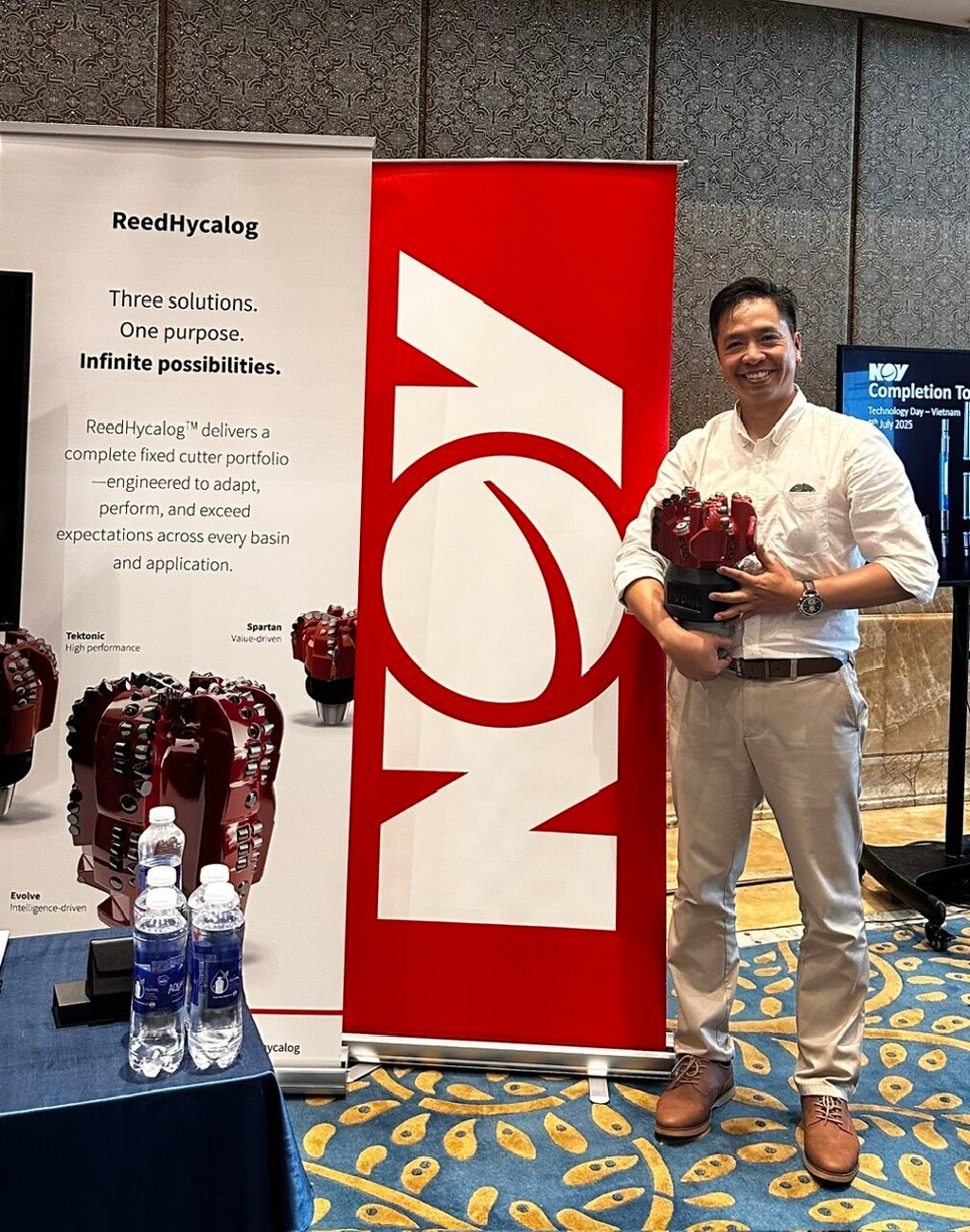
In March 2026, our team closed an order with one of the most demanding operators in Vietnam's oil and gas industry, for a drilling bit technology we had introduced through our partner NOV ReedHycalog. On LinkedIn, I called it a milestone. It was. But a milestone post is a highlight reel, and I want to tell the part I left out: what it actually cost to get there.
We started this in April 2025. Eleven months before that order landed, we had no contract, no purchase commitment, and no guarantee any of it would convert. What we had was a formation — granite basement, the kind Vietnam's offshore fields are known for, where drilling conditions punish weak technology fast — and an operator who was not going to take our word for it.
So we spent eleven months proving it. Workshops. Technical sessions. Field trials run at our cost, with no signed order backing them. Engineering time, travel, and trial runs advanced against a deal that could have gone nowhere at any point in that year. That is the real mechanic of selling technical equipment into Vietnam's oil and gas sector: you do not sell the pitch, you fund the proof, and you fund it before anyone owes you anything.
This is the piece Canadian companies underestimate most when they look at Vietnam. They budget for the sales cycle. They do not budget for the fact that the sales cycle here is a technical qualification process, and qualification is paid for by the vendor, not the buyer. I have sat on both sides of that table for 25 years, and the number of foreign vendors who walk away mid-trial — because the cost outran their patience, not their technology — is higher than the number who lose on merit.
What makes it survivable is not deeper pockets. It is knowing, before you start, that this is what an eleven-month unpaid proof period looks like, and building your BD budget and your internal expectations around that reality instead of around a quarter-by-quarter sales forecast that assumes Vietnam behaves like a mature Western market. It does not. State-linked and major operators here move on internal validation timelines that have nothing to do with your fiscal year.
A local partner does not shorten that eleven months. What it does is change what you are proving. Without one, you are proving your technology works and that you are a legitimate, stayable vendor in a market you do not know. With one, the second question is already answered, and every trial cycle counts only toward the first. That is the difference between an eleven-month qualification and one that runs two or three cycles longer, or dies from vendor fatigue before it finishes.
The order we closed in March 2026 is real, and I am proud of the team that stayed the course. But if I am honest with a Canadian company weighing Vietnam right now, the lesson is not "persistence pays off." Persistence is table stakes. The lesson is: know the real bill before you sign up for the fight. Budget the unpaid proof period as real capital at risk, not as a rounding error in a BD plan — because it is the single most common reason good technology never makes it to a signature in this market.
Working on a Vietnam market decision? Get in touch.